Why won't they just change?

Why won't they just change?
It’s a question we whisper to ourselves when someone we love is stuck or struggling.
We humans have a peculiar tendency to take it upon ourselves to change other people — to tell the person we love what they need to do to make their lives better, to just choose different partners, to react more rationally to that colleague, to simply stop that destructive addiction.
From the outside, it’s so clear to us what’s going on, and our parent/partner/child/friend (as applicable) simply needs to hear it from us and, VOILA!, they will start on a new course and irreversibly improve their lives.
We administer unsolicited advice, we stage interventions, we send podcasts and blog posts and content in the hope that the penny will drop.
A few years ago, I suggested to my Dad that he watch the Disney movie “Inside Out”, naively hoping that this 95-minute animation (watch it if you haven’t) will lead to him fully connecting to his emotions after years of suppression that is typical for a man born in the late 1950s.
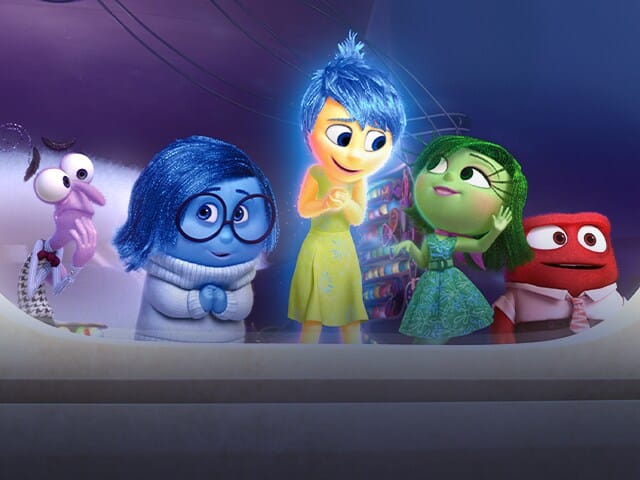
For several days, I waited patiently for the text I longed for: “Adam, you are right!!!! I watched the movie and now I have cried and released and, boy, I feel such a lightness in my being.”
Spoiler alert: the text never came.
And it’s not just family. I’ve done it in love, too.
I was once in a romantic relationship that was very unhealthy and rather dysfunctional. Well, there were many, but that’s for another article. I saw my partner’s patterns, her family relationships, her addictions (I had plenty of my own), and I convinced myself that I had the answers.
I thought to myself, if I just send her this School of Life video, she will recognize why we fight all the time. If I convince her to go to therapy, she will understand that her wounds come from XYZ place and that our most recent conflict is merely a front for something deeper.
Of course, there are times when interventions are extremely important and perhaps necessary for example, offering shelter in situations of ongoing abuse and companionship during times of suicidality.
What’s underneath it all?
The next time you put your cape on and try to be the hero, I challenge you to ask yourself a couple of questions:
Who am I doing this for? Why do I need them to change?
Only you know the answer that’s true for you, and it may take time to sit with this and understand the complexities.
I wanted to change my ex-partner because I identified as the savour, the caretaker whose self-esteem derived significantly from ‘helping’ others. It fed my ego and let me abandon my own needs, which I long ago decided, subconsciously, didn’t matter.
Perhaps I was also a little selfish. I don’t use ‘selfish’ here negatively or with judgment. If my partner is more emotionally healthy, then maybe we will fight less, and my life will be more peaceful and I will feel more content. Noble and valid, sure, but it means my intentions are not wholly altruistic.
I wanted to change my Dad because my inner child still longed for the love and attention that I did not receive adequately when I was young. I was not ready to accept that I needed to grieve those unmet needs and understand - deeply understand - that I could now parent myself and give my inner child the acceptance, tenderness and care he needs.
What’s the pattern here? In both cases, I was trying to change another human being because of something I needed and could provide myself.
A Word of Caution
We should tread very carefully when trying to make people realize aspects of themselves and forcing them to face repressed truths. We all develop parts of our personalities and wear masks to hide parts of us we aren’t yet comfortable revealing.
I still use humour as a coping mechanism to distract from feelings I'm uncomfortable expressing. This is not an accident, it’s a survival strategy. We all have our quirks. We adapted to cope with our circumstances - it's evolutionary genius, even if it might not be productive in later life.
In the book “Why Am I Afraid To Tell You Who I Am”, the author John Powell described the risks of such interventions:
“We are all tempted to unmask others, to smash their defenses, to leave them naked and blinking in the light of the illumination provided by our exposé. It could be tragic in its results. If the psychological pieces come unglued, who will pick them up and put poor Humpty Dumpty Human Being together again? Will you? Can you?”
This is important. Before you tell your loved one about that thing they do, or casually mention that condition you think they have, consider whether knowing that information is actually what they need and are ready for, rather than what you want to give them.
So what can you do?
With people we are close to - particularly with family, and also with partners or close friends - we are interconnected and form a constellation. We are doing a dance. When we move in a profound way by noticing and changing our unhealthy patterns, those connected to us may start to change in turn. They may not consciously realize it’s happening, but it’s a natural consequence of someone in the system (you), making a change.
We only have control over our own lives. Be the example. Start with yourself, with your own patterns, and be there for those around you if and when they are ready to work on their own ‘stuff’.
Check in with yourself:
Who am I doing this for?
Why do I need them to change?
Am I accepting them and allowing them to be exactly who they are right now?
Is the part of me that is triggered a reflection of something I haven’t yet accepted in myself?
Is there something I need from them that I can provide myself?
Ironically, it is counterintuitive to even try to make others change. When we drop the agenda - when we stop needing others to be different - we give space for others to make changes for themselves.
We see and accept them for who they are. Being accepted for who we are is something all humans crave. This is the catalyst for our growth, and the growth of the ones we love.
Journalling Prompts
- When someone in my life isn’t changing, what emotions come up in me first (frustration, fear, sadness, urgency)?
- What stories do I tell myself about why they should change?
- What feels at stake for me if they don’t change?
- When I try to help, fix, or intervene, what do I hope will improve for me?
- How does being the “one who sees clearly” or “the helper” make me feel about myself?
- In what ways has caretaking been a source of identity, safety, or worth for me?
No spam, no sharing to third party. Only you and me.
Member discussion